Developing 4-way coordination and speed at the drumset: 2s n' 3s
Episode 6: Playing double and triple stroke combinations between the snare drum and bass drum in swing and latin/funk contexts.

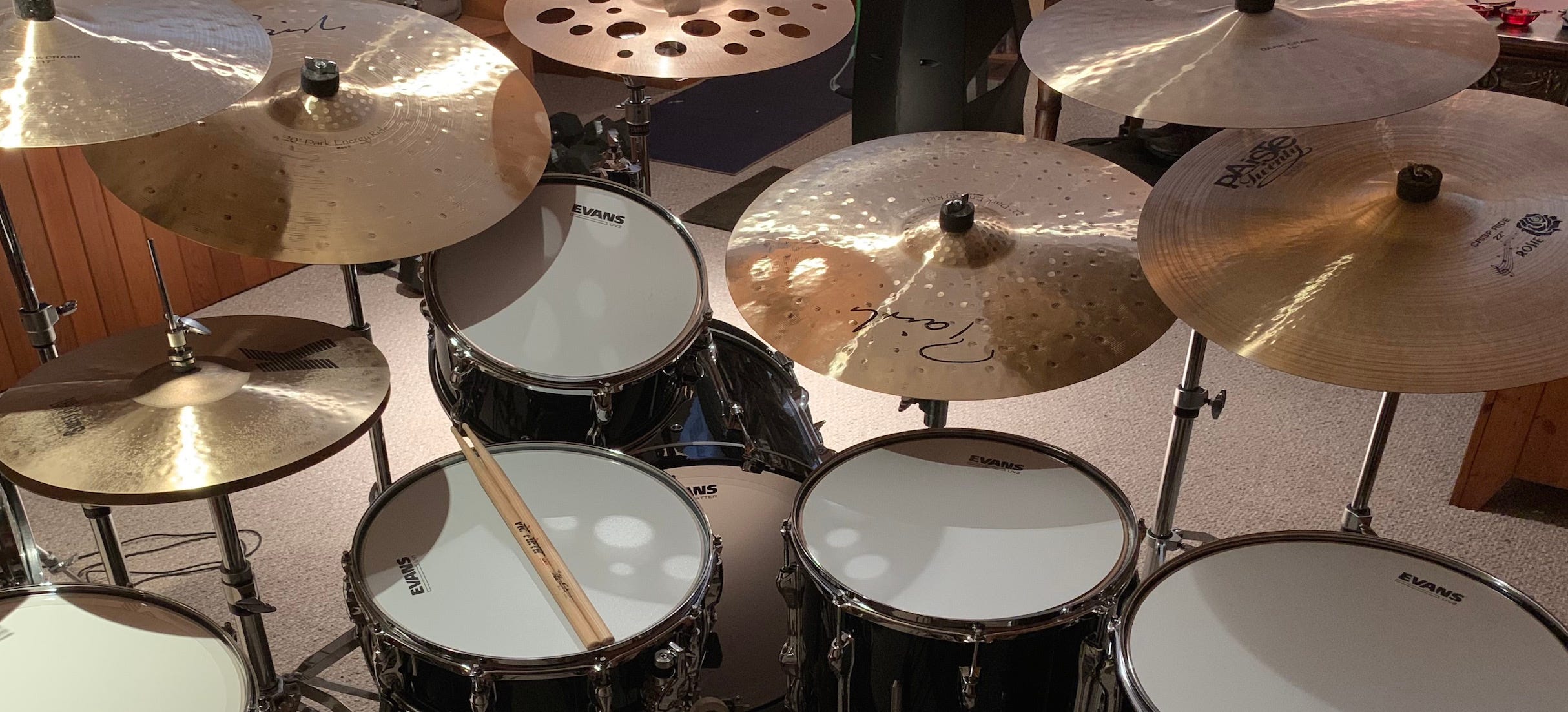
Developing 4-way coordination in swing, latin & funk contexts.
Applying motor control rehabilitation principles to these exercises:
start simple, isolate body parts: 2-way coordination at first
cover a spectrum of relevant drumming vocabulary
as skill develops, increase speed only when very slow tempo work is precise
progress to 4-way coordination
Initially, think of each of the following exercises as tests of your drumset coordination…
Each of these exercises represents a specific playing skill. If you can play either of these exercises really well at 30, 60, 90 and 120 bpm – don’t bother to work on that exercise. If you can play the exercise very cleanly at each of these tempos then you already have that skill; move on to other things you need to work on!
These are technical exercises, not at all musical or artistic; the purpose of these exercises is to develop the technique necessary to be able to start to develop your musical playing abilities, to be able to build your drumming vocabulary. When these technical exercises have been mastered, move on to other practice efforts that develop your artistic capability. There are a great many authors who’ve put together excellent resources in swing, latin and funk styles.
The objective here is to develop the technical skill necessary to accurately play whatever musical ideas you can think of. If your musical mind can hear a groove, a fill or a comping phrase, you want to have the technical game to execute that musical idea.
Exercise 5
These are simply extensions of the previous two exercises that developed our capacity for playing a wide range of single and double stroke rhythms between the snare drum & bass drum in both swing and latin/funk contexts. Exercise 5 has us playing double and triple stroke combinations in each of these styles.
We could expand this idea endlessly: 3s and 4s, 3s and 5s, 7s and 4s. Let’s not. The vast bulk of our playing is comprised of single and double stroke combinations, interspersed with rests. Still, it is true that every once in a while we’ll want to play a figure that involves a nasty triple stroke on the big drum. But hey. Let’s be careful out there.
As we focus on developing our technique, and relishing the resulting ability to play more complex figures, we mustn’t forget the musical power of quiet space. Of simplicity being almost always better than complexity. Of rests. Of not playing something rather than playing everything we possibly can.
That said, every once in a while we might want to fire off three consecutive, musically valid bass drum notes. So, here we go.
Begin as slowly as possible; try to start at 30 bpm. If that’s too difficult, start at the slowest tempo you can perform. As your skill develops, play the exercise at progressively slower tempos until you can play the exercise at 30 bpm. Stay at 30 bpm until you can play the exercise at that tempo comfortably and accurately. Only then should you begin working at faster tempos. Increase tempo gradually, perhaps in 5 bpm increments.
Exercise 5.1
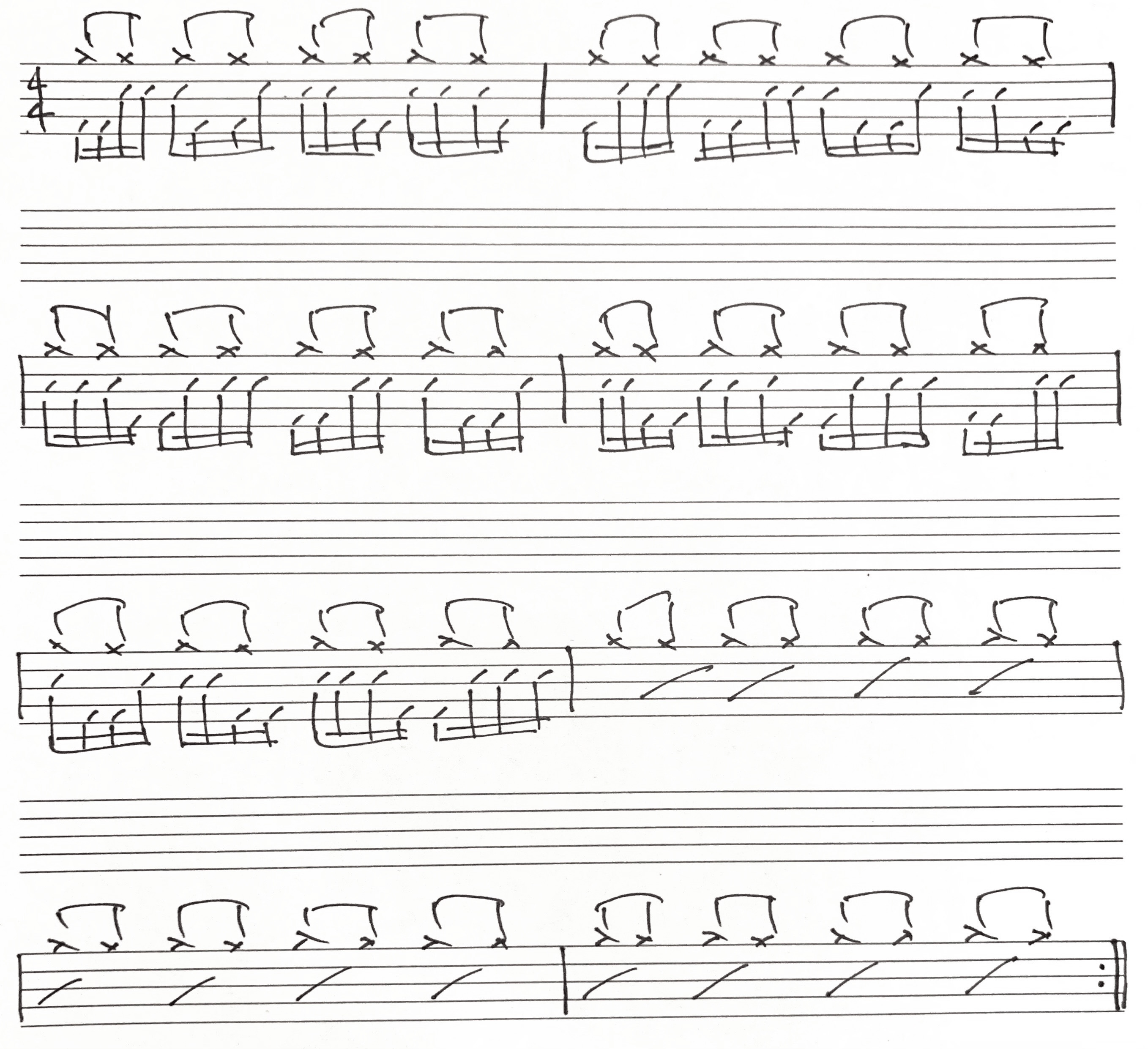
5.1 involves double and triple strokes between the SD & BD in a straight, latin/funk style. Choose for yourself what you want your ride cymbal + hh ostinato to be: straight 8ths, straight 16ths, some combination of 8th and 16th notes, 1/4 notes on the beat or syncopated. Play the hh in a variety of places. There’s a nearly infinite number of ways to approach the ride cymbal + hh ostinato…
Here’s a new wrinkle. In my own practice, I’ve approached all this work in an effort to develop my ability to improvise grooves in swing, funk and latin styles. This exercise runs through five bars of 4/4 time. Let’s start to include some improvised groove playing as part of our practice routine. Each written component of Exercise 5 will play out over five bars; play an additional three bars tagged onto to those five over which you’ll improvise in either a swing, latin or funk style.
Exercise 5.1
Bass drum leads the figures. Straight 8th notes, played on the ride cymbal or closed hh. Feel free to explore a variety of ride cymbal + hh ostinatos here. Last three bars are open for comping improvisation. Repeat ad nauseum.
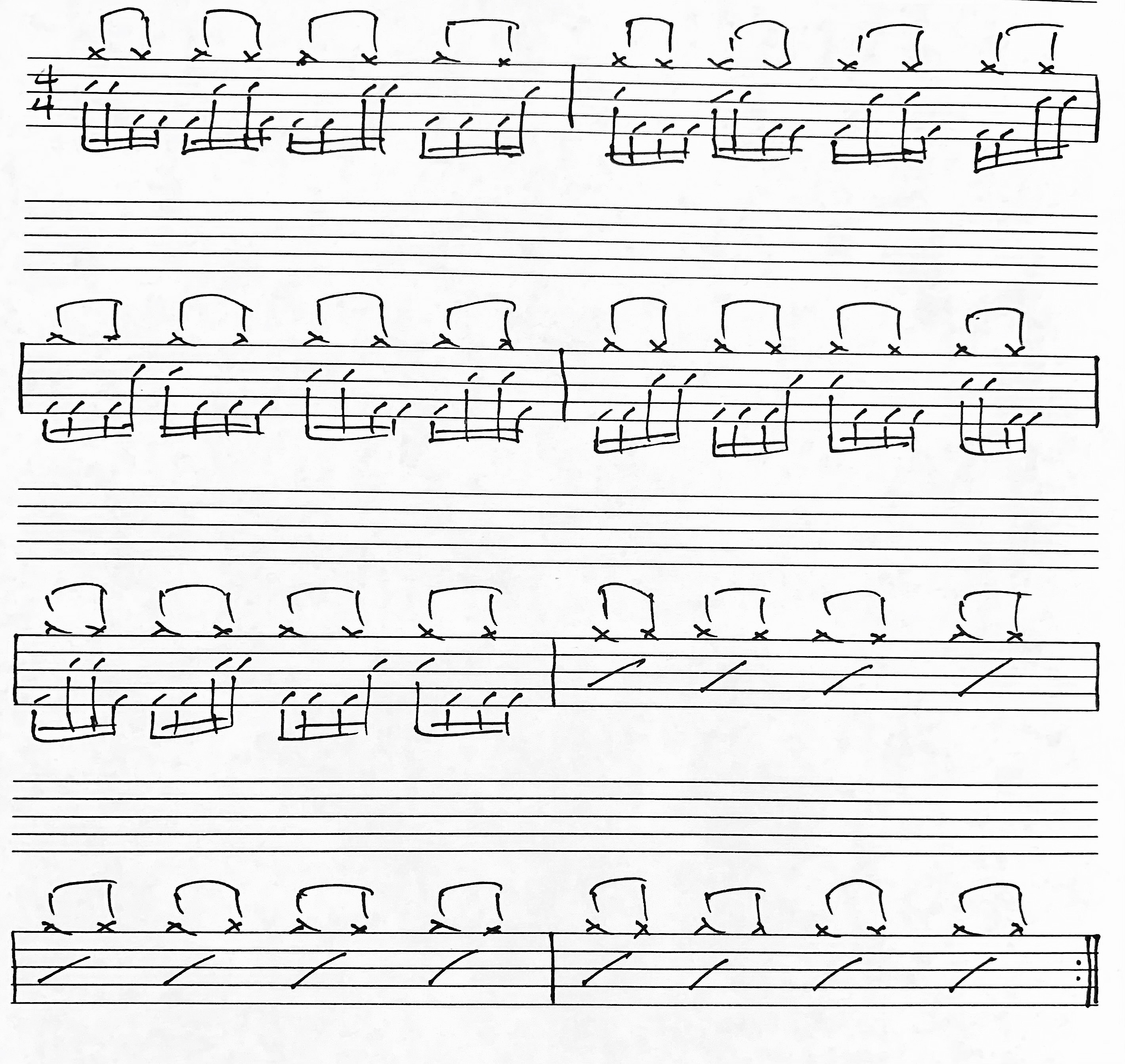
Exercise 5.1
Snare drum leads the figures. Straight 8th notes, played on the ride cymbal or closed hh. Feel free to explore a variety of ride cymbal + hh ostinatos here. Last three bars are open for comping improvisation. Repeat ad nauseum..
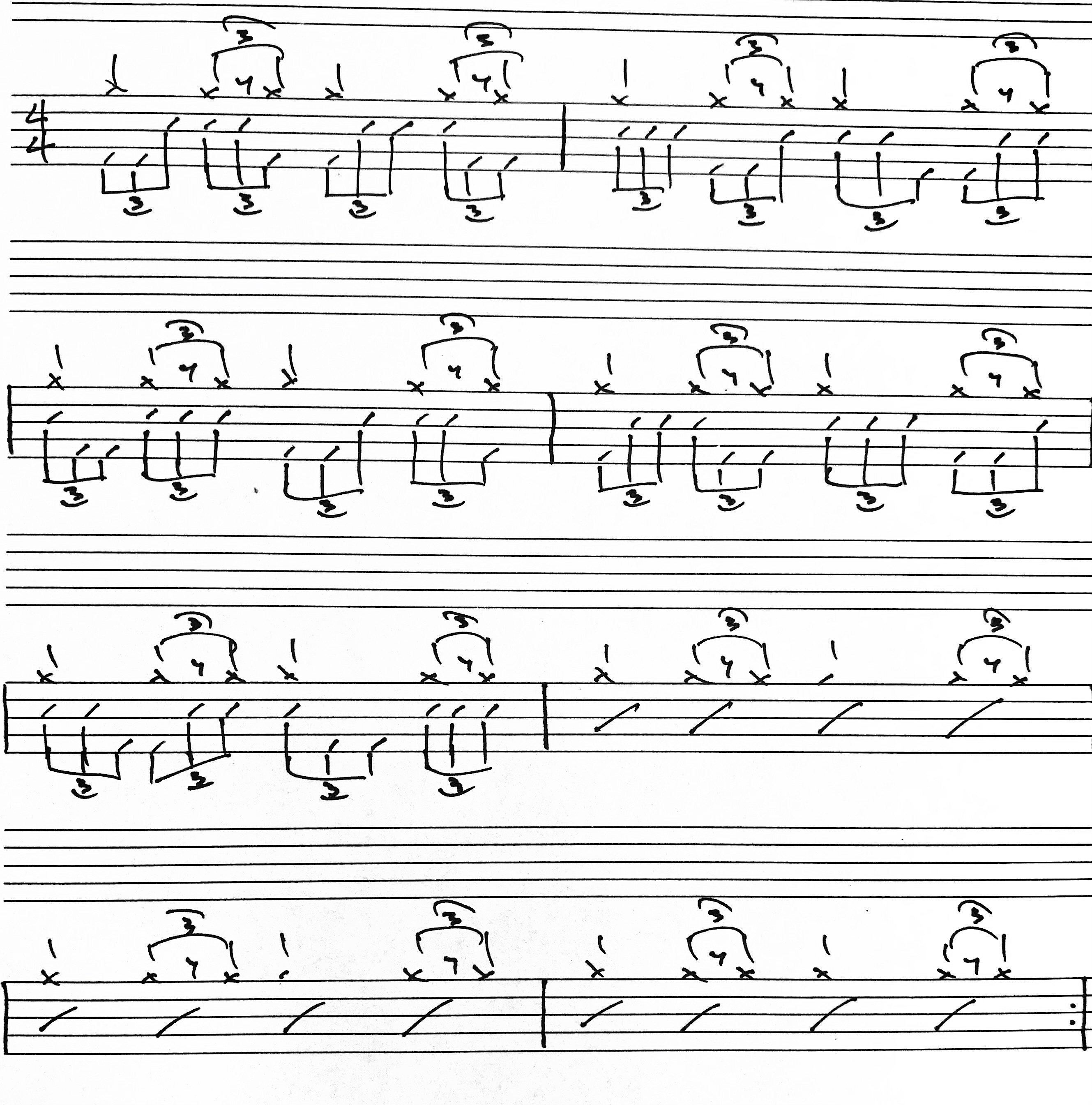
Exercise 5.2
Swing groove, played on the ride cymbal with hh on 2 & 4. BD leads the figures. Last three bars are open for comping improvisation. Repeat ad nauseum.
Exercise 5.1
Swing groove, played on the ride cymbal with hh on 2 & 4. SD leads the figures. Last three bars are open for comping improvisation. Repeat ad nauseum.
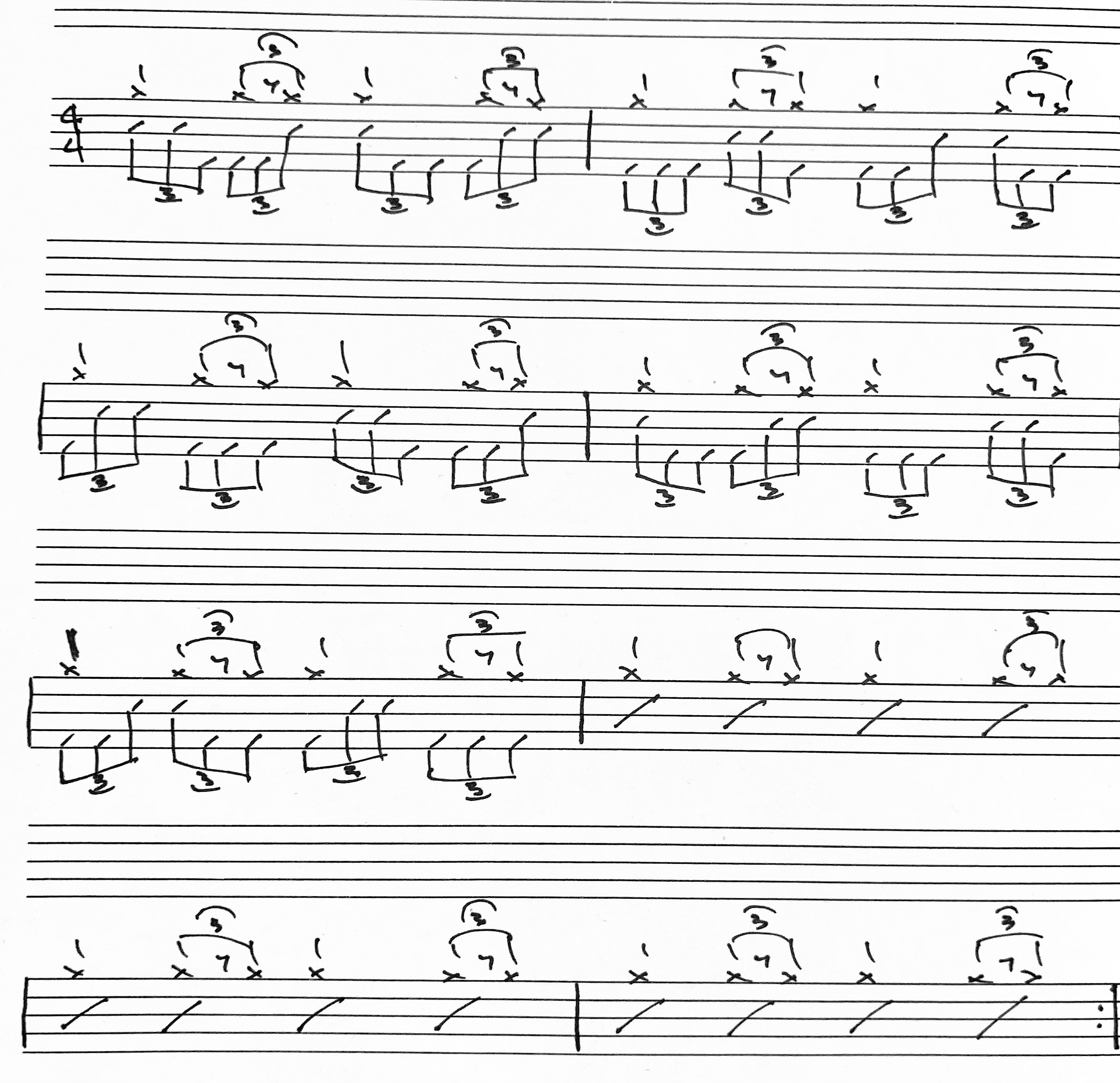
Ok. I’m probably out of technique building, 4-way coordination developing exercises. Having developed good skill with each of these exercises, I expect that a drummer is ready to move onto to other practice options. For example, I’m moving through John Riley’s books and some Garibaldi stuff at this point. There are loads of great options.
What I plan to do going forward is post a video every couple of weeks of me playing something… an improvised 64 bars, an exercise out of a book, or… The objective for me now is to commit myself to getting in a good amount of practice and using the video option to keep my motivation high.
Thank you very much for looking this over. I wish you much success in getting your playing to a point where you can faithfully perform through your body that which your brain wants to hear. I’m really keen to hear about your experience with these exercises. Please feel more than free to comment and let me know how this is working for you.
Next Up:
Episode 7.
Motor Learning. In the clinic and in the shed. How treating people with low back pain is a lot like developing better 4-way coordination at the drumkit.